
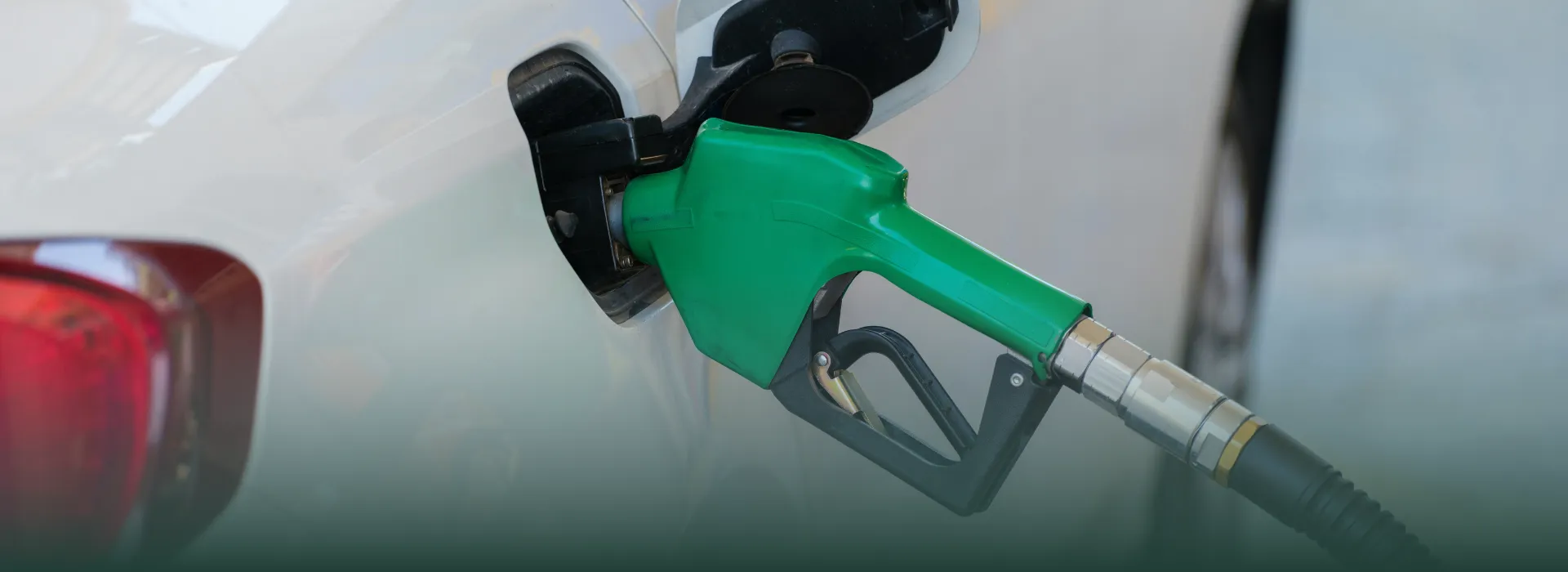
Rising fuel prices continue to place a heavy burden on many professionals.
For some managers, self-employed people or mobile employees, travel now represents a real financial challenge.
Tradespeople, sales representatives, construction professionals, self-employed professionals, farmers… many use their personal vehicles daily for work. And as the mileage mounts up, the bill rises quickly.
To address this situation, the government is renewing and expanding several support schemes in 2026, including the fuel allowance for so-called “high-mileage” workers.
At Alliés Conseils, we take a look at the schemes you need to know about and the conditions for eligibility.

A €100 fuel allowance for workers who drive long distances
The main support measure introduced in 2026 is aimed at employees and self-employed workers who use their personal vehicles for work purposes.
The amount of this allowance is set at €100 per beneficiary. The aim is to offset part of the rise in fuel costs for low-income workers who travel long distances.
This allowance is available to both employees and self-employed workers in the BIC, BNC or BA categories.
In practical terms, this could include a tradesperson who visits clients daily, a private nurse, a travelling sales representative, or a business executive using their personal vehicle for business travel.
To be eligible, several criteria must be met.
The applicant must be resident for tax purposes in France and be at least 16 years old as at 31 December 2024.
They must also have a reference taxable income per share of €16,880 or less. This corresponds, for example, to approximately €1,508 net per month for a single person.
The use of the vehicle is also a key factor. The professional must use their personal vehicle for work and travel either more than 15 kilometres between their home and their place of work, or more than 8,000 kilometres per year for work purposes.
The vehicle must be a combustion engine or a non-rechargeable hybrid. Electric vehicles, hydrogen-powered vehicles and company cars are excluded from the scheme.
How do I apply?
Applications can be made directly via “My Public Finance Account” on the tax authority’s website from 27 May 2026.
The business owner simply needs to enter their tax reference number, the vehicle registration number and the vehicle registration certificate number.
The payment will then be made within around ten days to the bank account already on file with the tax authorities.
Please note, however: the tax authorities may carry out retrospective checks for a period of five years. It is therefore essential to keep all supporting documents relating to business travel.
Specific support for certain sectors
In addition to the “high-mileage” scheme, several sectors particularly exposed to rising energy costs also benefit from additional measures.
- Agricultural businesses using non-road diesel may be eligible for a partial refund on agricultural non-road diesel.
- Construction firms heavily reliant on non-road machinery will also have access to a dedicated scheme from June 2026.
- Road hauliers, fishing companies and certain inland waterway transport operators can also access dedicated support.
- For micro-enterprises and SMEs, a “Flash Fuel Loan” is also available to help businesses where fuel costs account for a significant proportion of turnover.

An opportunity for employers too
Employers can also take direct action to support their staff.
The fuel allowance paid by the company is now capped at €600, with no social security contributions or tax payable.
This measure has been made more flexible, as no specific supporting documents are now required.
For some companies facing recruitment difficulties or mobility issues, this support can become a real social lever.
Key takeaways
In 2026, fuel-related support measures are evolving to better target professionals most exposed to rising energy costs.
For business owners, the self-employed and employers, these schemes represent an opportunity to reduce certain expenses whilst safeguarding their business. However, it is still necessary to identify the support that is truly suited to your situation and to complete the necessary procedures within the deadlines.
Before submitting your application, remember to check your eligibility using the simulators provided by the government.
This helps you identify the subsidies available to you based on your circumstances, your business activity and your fuel consumption, whilst avoiding errors when submitting your claim.
At Alliés Conseils, we support business leaders in analysing the schemes available, optimising the support available and managing the tax and social security implications of their business. A discussion at an early stage can sometimes help to avoid oversights… and significantly reduce certain costs.